
Audio Mixing Standards
All audio in Microsoft Flight Simulator 2024 has been mixed respecting the recommendations put forward by the International Telecommunications Union in the document ITU-R BS 1770-3(opens in a new tab). Summing it up can be done using the following three basic rules:
Integrated Loudness: -24 LKFS
Tolerance: +/- 2 LU
Max True Peak: -2 dBTP
Every audio content provider should be aligned with this standard to ensure mix consistency between all Microsoft Flight Simulator 2024 partners and add-on creators.
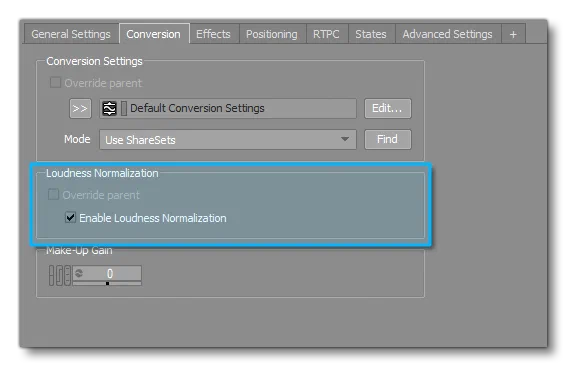
To maintain this standard, you’ll first need to make sure your sounds are normalized in loudness. You can normalized them directly in the Wwise editor using an option from the Property Editor. We recommend to set it up from a parent actor-mixer, so your whole structure will benefit from it:
The Wwise editor also features a Loudness Meter that adheres to the ITU recommendations mentioned above. Using this will help you reach the required levels when mixing your sounds:
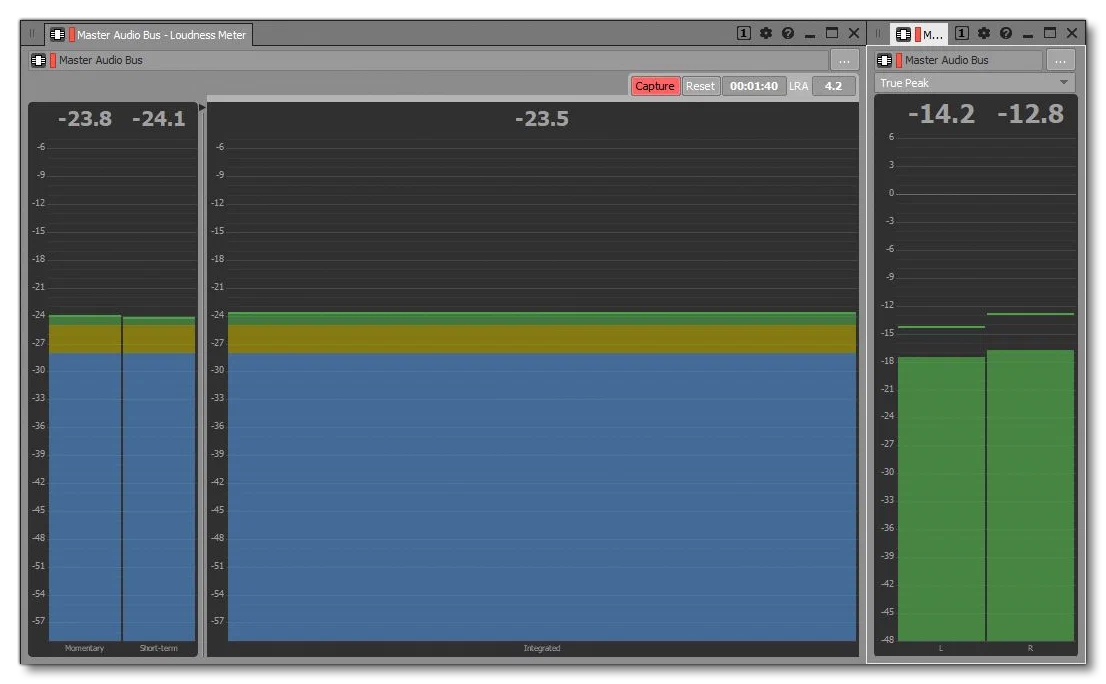
When mixing your sounds, the engine sounds are the most frequent and most important sounds in the simulation. They can be very loud during takeoff, and then drop down in volume during cruise, and are constantly being heard by the user. This means that they are the sounds that bring the most life to the aircraft, and essentially drive the mix of all other sounds. Note that there is a version of this loudness meter available to you in the simulation through DevMode, and this can be used on your audio to help find any issues. See here for more information:
To help you with the mix of these sounds, here are some level references in LU Short Term measure that were used to mix the aircraft in Microsoft Flight Simulator 2024. You don’t have to respect them to the nearest figure, but the closer you are to these measures, the closer your mix will be in compliance with the loudness standards.
Piston Engines
| Viewpoint | Flight states | Loudness Unit |
|---|---|---|
| Cockpit | Idle on ground | -33 LU |
| Cockpit | Full Throttle on the ground | -22 LU |
| Cockpit | Cruise Altitude | -23 LU |
| Outside | Idle on ground | -30 LU |
| Outside | Full Throttle on the ground | -21 LU |
| Outside | cruise altitude | -23 LU |
Turboprops
| Viewpoint | Flight states | Loudness Unit |
|---|---|---|
| Cockpit | Idle on ground | -32 LU |
| Cockpit | Full Throttle on the ground | -20 LU |
| Cockpit | Cruise Altitude | -23 LU |
| Outside | Idle on ground | -25 LU |
| Outside | Full Throttle on the ground | -19 LU |
| Outside | cruise altitude | -20 LU |
Turbofans/Jets
| Viewpoint | Flight states | Loudness Unit |
|---|---|---|
| Cockpit | Idle on ground | -30 LU |
| Cockpit | Full Throttle on the ground | -17 LU |
| Cockpit | Cruise Altitude | -26 LU |
| Outside | Idle on ground | -28 LU |
| Outside | Full Throttle on the ground | -15 LU |
| Outside | cruise altitude | -24 LU |
Fighter Jets
| Viewpoint | Flight states | Loudness Unit |
|---|---|---|
| Cockpit | Idle on ground | -30 LU |
| Cockpit | Full Throttle on the ground(No afterburner) | -26 LU |
| Cockpit | Full Throttle on the ground(With afterburner) | -20 LU |
| Outside (front of aircraft) | Idle on ground | -24 LU |
| Outside (front of aircraft) | Full Throttle on the ground(No afterburner) | -18 LU |
| Outside (front of aircraft) | Full Throttle on the ground(With afterburner) | -15 LU |
| Outside (back of aircraft) | Idle on ground | -20 LU |
| Outside (back of aircraft) | Full Throttle on the ground(No afterburner) | -16 LU |
| Outside (back of aircraft) | Full Throttle on the ground(With afterburner) | -13 LU |
Helicopters
| Viewpoint | Flight states | Loudness Unit |
|---|---|---|
| Cockpit | Idle on ground | -23 LU |
| Cockpit | In flight with full throttle and full collective on the ground | -23 LU |
| Outside | Idle on ground | -23 LU |
| Outside | In flight with full throttle and full collective on the ground | -21 LU |
Gliders
| Viewpoint | Flight states | Loudness Unit |
|---|---|---|
| Cockpit | Lowest speed in flight | -33 LU |
| Cockpit | Highest speed in flight | -21 LU |
| Outside | Lowest speed in flight | -33 LU |
| Outside | Highest speed in flight | -21 LU |
Below you can find links to some pages that will help you to understand the ITU standard: