SIMOBJECT CONTAINERS
The SimObjects Containers window is opened from the Debug menu and can be used to analyse the different SimObject "containers" within a scene while running Microsoft Flight Simulator 2024:
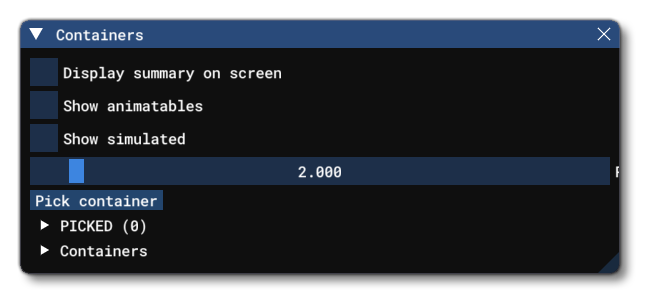
The top of this window has the following options:
- Display Summary On Screen: When enabled, this will show a list of items on the screen as a summary of the SimObjects that are currently in the scene.
- Show animtables: Enabling this will show the animation tables as text for each of the visible SimObjects.
- Show Simulated: Enabling this option will expand the window and show all the simulated objects that are currently loaded into the scene.
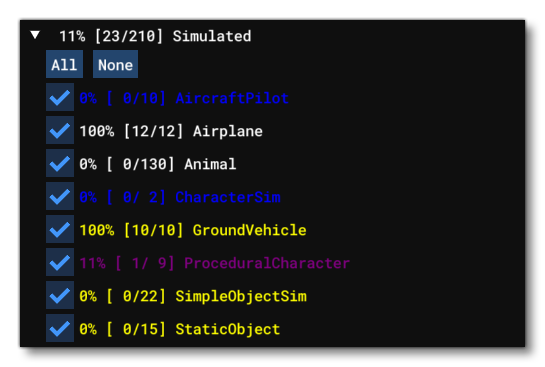 Each group of object types, shows a percentage for how many are enabled as well as a double value where the first value is the actual number of the objects that are enabled, and the second number is the total number of those objects that are loaded.
- Sphere Size Slider: This slider will change the visible size of the debug "sphere" around the different SimObjects. By default this will only affect the user aircraft, and only when "Show animtables" is enabled, however it will also affect the sphere shown for other SimObjects when they have it enabled (explained in more detail below).
Picked
Above the "Picked" section, you have a button Pick Container. Clicking this button will add boxes to the simulation render to show each of the different "containers" that can be examined. You can click on any of these boxes to make that container the "picked" container, and you can click on the Reset All Picked button to clear the currently picked selection. Once a container has been picked, you can expand the picked section to get the following:
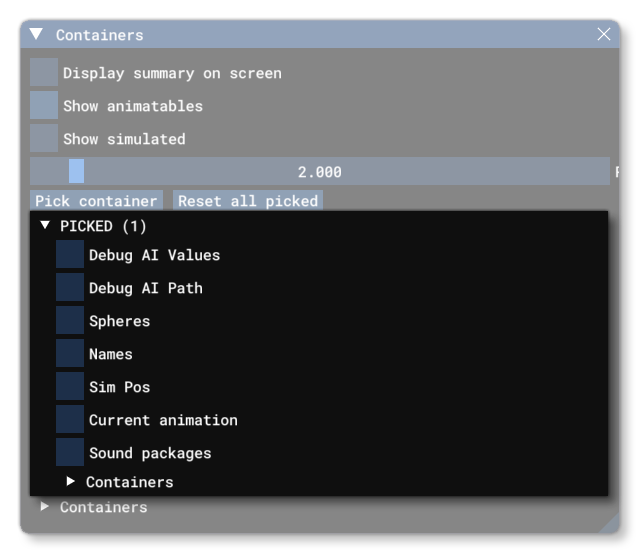
The options at the top are "global" options that will enabled or disable various debug tools for all the picked containers. These options are listed below, but note that not all category of SimObject container will have all these options:
- Debug AI Values: Selecting this will add an in-sim overlay with certain values relevant to the AI operation.
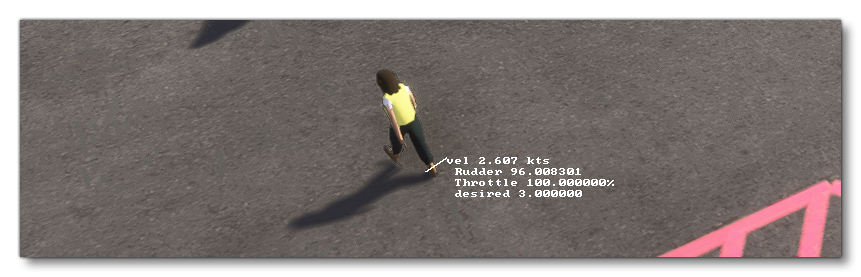
- Debug AI Path: Similar to the option for values, this will display the different paths that AI are using as an in-sim overlay.
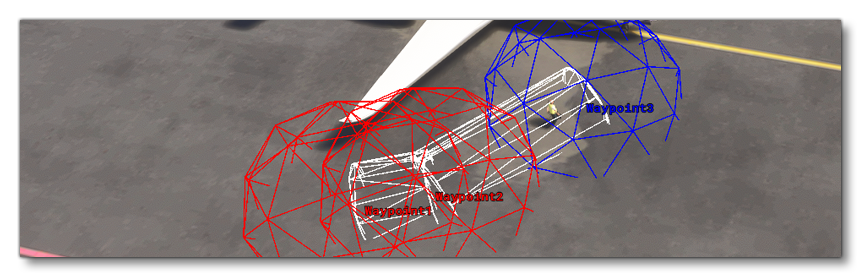
- Spheres: This will show a debug sphere around the item(s) that are in the category or container, and you can control the size of the sphere using the global slider at the top of the window.
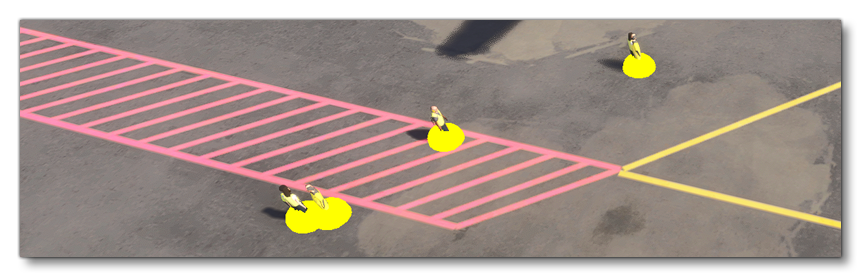
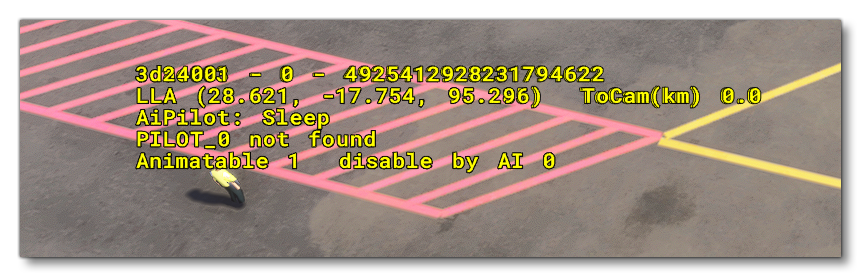
- Names: When enabled, this option actually does a bit more than just display the names of the different SimObjects. In a lot of cases (like for aircraft) it will also display the position, the airport, the GUID and other information.
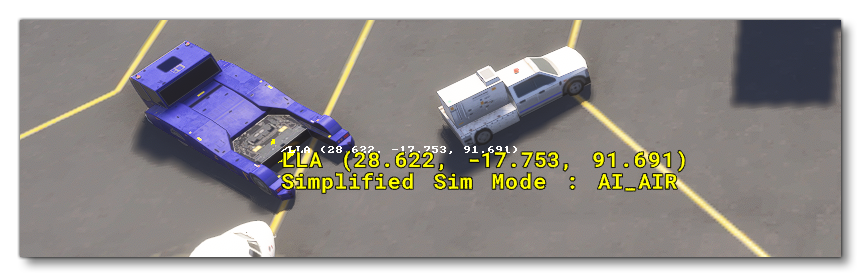
- Sim Pos: When enabled, this will display the position (lat / lon / alt) of the simulation as well as the "mode" the simulatio is in for the object.
- Current Animation: When this is enabled the current animation state and name will be displayed beside the SimObject(s).
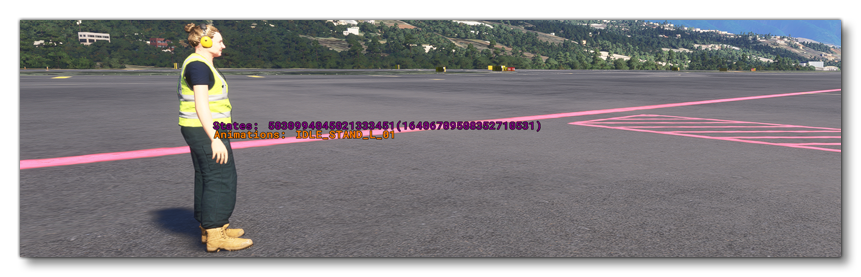
- Sound Packages: Enabling this will show a list of all the loaded sound packages for the SimObject.
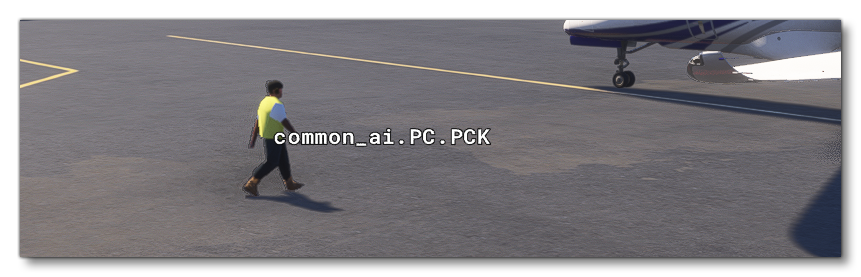
Under the global options listed above you'll see there is a "container" option. Clicking this will expand the container to show all the different SimObjects that are within. Clicking each of the different SimObjects will further expand the view to show some details about that object and individual debug options.
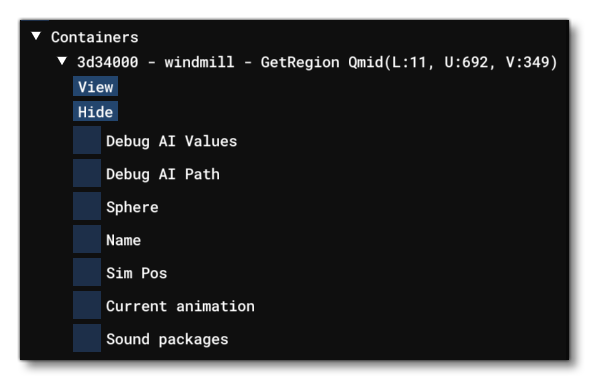
You will be able to toggle the different visualisation options for the object on or off (like Sphere, Names, etc...), and you'll see information about the AI state or the position, etc..., if appropriate ot the object. Note that some objects will also have two buttons available, View and Hide. The View button can be used to zoom the camera to view the item. However, note that the View button will only work if you are not using the developer camera and the simulation camera is set to an exterior view (if you click the button while in cockpit view, the camera will be moved inside the object being viewed!). The Hide button is used to hide the SimObject (make it invisible) and - when pressed - will change to the Show button, which is used to unhide the object again.
Containers
At the very bottom of the window you have the containers section, that - when expanded - shows all the SImObject containers that are currently loaded into the scene:
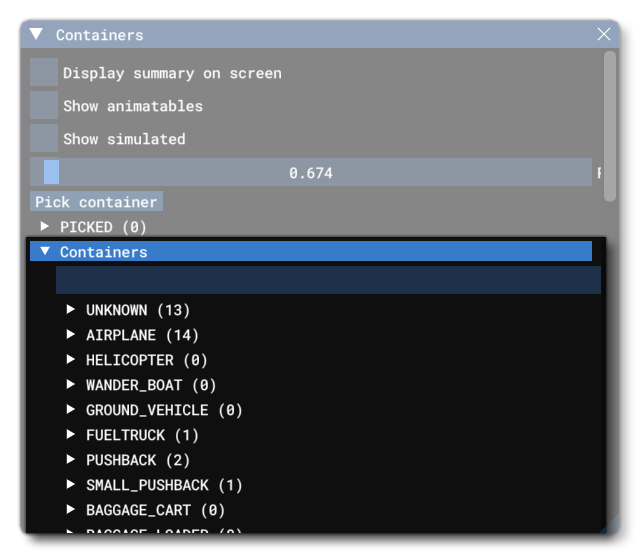
At the top of the list there is an input box where you can input text to filter the list contents. The list itself is comprised of numerous expanding category sections, and within each categoryyou have some global visualisation options and then a list of all the SimObjects that belong to the expanded category. These global options are the same as those explained in the Picked section (above), as are the individual options when you expand a container.
Related Topics